Why can’t I stop thinking something bad will happen to my child??
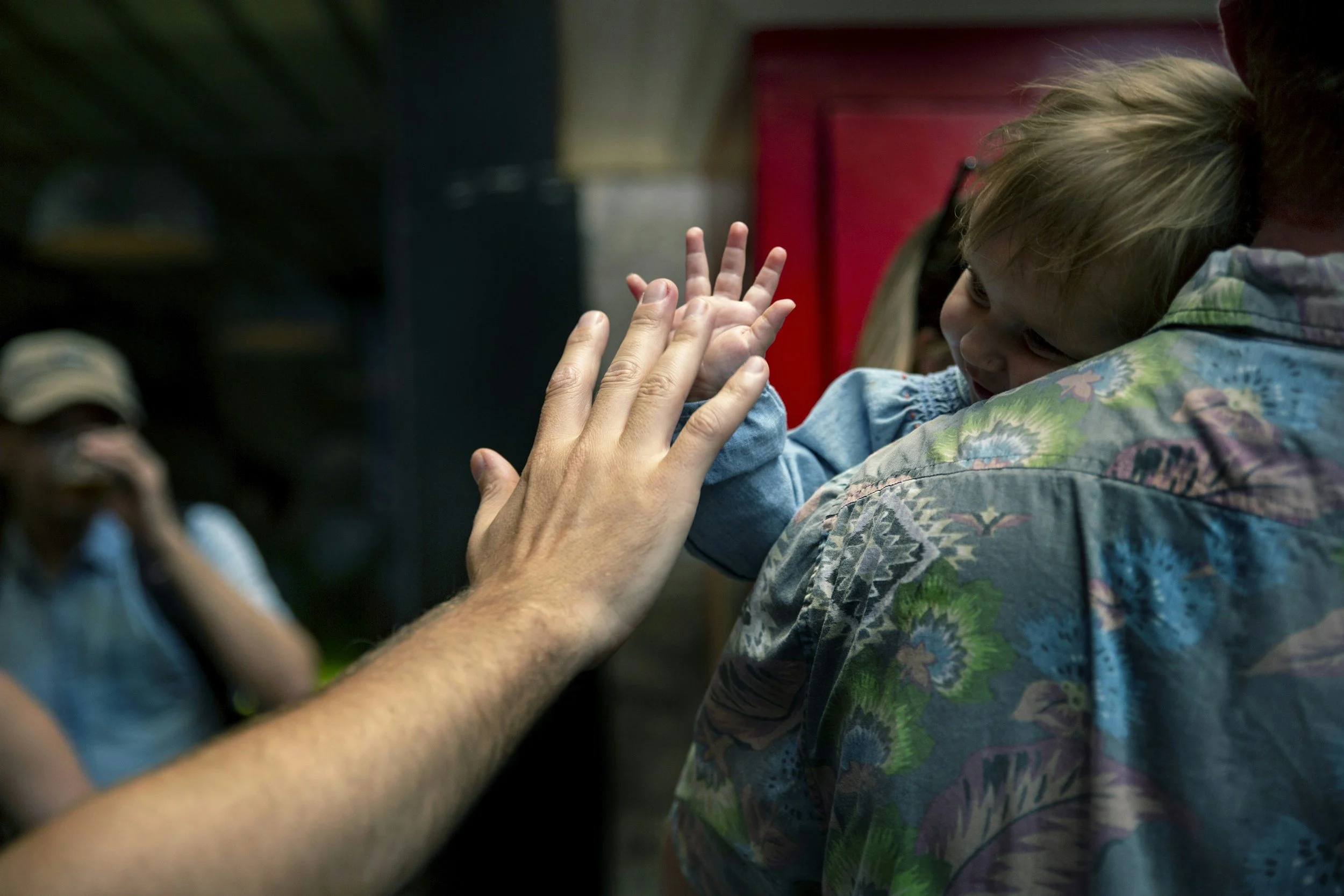
Many parents quietly carry a fear they rarely say out loud:
“What if something bad happens to my child?”
For some, the thought comes and goes. For others, it becomes constant background noise — showing up at bedtime, during school drop-off, while driving, or in the middle of otherwise ordinary moments.
You may look calm on the outside while internally scanning for danger all day long.
You double-check.
You overprepare.
You replay situations in your head.
You Google symptoms, worst-case scenarios, or parenting advice late at night hoping for reassurance that never fully lasts.
And often, underneath it all, is love.
Not weakness. Not failure. Not “being dramatic.”
A nervous system that has become convinced that staying alert is the same thing as keeping your child safe.

I experienced intense postpartum anxiety and OCD after the birth of my first child.
As a therapist, I knew the intrusive thoughts were not real — but that knowledge did not stop my nervous system from reacting as though danger was everywhere.
It was awful.
The thoughts felt loud, terrifying, and relentless. I remember feeling confused by how something I logically understood could still completely take over my body and mind.
At one point, I felt like I could not fully trust anyone around my baby — even her own father, who I knew logically was a completely safe and loving person.
That is how convincing postpartum OCD can feel.
The constant checking, monitoring, researching, and reassurance-seeking became exhausting. And honestly, at times, embarrassing. I worried about what it meant about me. I worried other people would not understand. I worried I was the only parent experiencing thoughts like this.
I was not. And neither are you.
That experience is a large part of why I feel so passionate about supporting parents experiencing anxiety, intrusive thoughts, and OCD for the first time after the arrival of a new baby.

Because postpartum OCD often does not look the way people expect.
Many parents experiencing it are loving, thoughtful, highly responsible people who are desperately trying to protect their children. They may appear calm, capable, and high-functioning on the outside while privately struggling with intrusive thoughts, mental checking, reassurance-seeking, or constant fear that something terrible could happen.
You may notice thoughts like:
“What if I miss something important?”
“Why can’t I relax?”
“What kind of parent has these thoughts?”
“Why does my brain keep showing me horrible images?”
“Am I secretly dangerous?”
“What if something happens because I wasn’t careful enough?”
The painful irony is that parents struggling with postpartum anxiety and OCD are often deeply loving and deeply conscientious parents. The fear comes from how much you care.
But living in a constant state of vigilance is exhausting.
Over time, anxiety can quietly steal:
presence
rest
enjoyment
connection
trust in yourself
Instead of experiencing moments with your child, you may feel stuck trying to prevent catastrophe at all times.

If this sounds familiar, you are not alone. And you are not a bad parent for having intrusive thoughts.
Therapy can help you understand what is happening in your nervous system, reduce fear around intrusive thoughts, and begin to separate love from constant hypervigilance.
You do not have to spend motherhood bracing for disaster in order to be a good parent.
Safety does not come from thinking about worst-case scenarios all day long.
And peace is not something you have to earn by worrying enough.
I work with both mothers and fathers struggling with post partum anxiety as well as post patum OCD in Culver City in person, across Los Angeles and California.
Why Do I Overthink Everything in My Relationship?
You try to act normal.
You tell yourself to calm down.
You know you’re spiraling.
And still — one short text, one delayed response, one subtle shift in energy can completely hijack your mind.

You replay conversations while brushing your teeth. You analyze punctuation. Timing. Tone.
You wonder if they’re pulling away. You wonder if you said too much.
You wonder why you can’t just relax and enjoy the relationship like other people seem to.

Meanwhile, you’re functioning everywhere else.
You handle work. Deadlines. Kids. Responsibilities. People depend on you. You are capable. High performing. Self-aware. But relationships?
Relationships make you feel emotionally chaotic. And that disconnect is exhausting.
Because part of you knows the overthinking is too much. But another part of you is terrified to ignore it. What if your anxiety is actually intuition? What if you miss something important? What if relaxing is what gets you hurt?
AND THE KICKER, what if they “find out.”
The underlying, unspoken, maybe not even thought fear. What is they find out about who you really are…

So your brain stays on. Scanning. Monitoring. Preparing.
Not because you’re dramatic. Because somewhere along the way, love stopped feeling emotionally safe. A lot of people who overthink in relationships in Los Angeles and across California become experts at self-abandonment without realizing it. You start tracking the other person so closely that you slowly lose connection to yourself. Because relationship “failure” feels like just any regular old failure. And the sneaking suspicion creeps in, what if it is me?
You stop asking:
“What do I feel?”
And start obsessing over:
“What do they feel?”
“Are we okay?”
“Did something change?”
“Am I too much?”
“Should I pull back?”
“Should I ask for reassurance or will that push them away?”
The worst part is how lonely it feels internally.
Because from the outside, people assume you’re fine. Maybe even confident. But internally you are carrying constant emotional noise. Constant second-guessing. Constant tension.

Even good relationships can feel hard to enjoy when your nervous system is always waiting for the other shoe to drop. Sometimes the overthinking turns into resentment. You become tired of being the one who cares more. Tracks more. Thinks more. Needs more reassurance. Notices every shift. Holds everything emotionally.
And then comes the shame:
“Why am I like this?”
“Why can’t I just be easy?”
“Why do relationships affect me this much?”
But overthinking is rarely just overthinking. Usually it is fear.
Fear of abandonment.
Fear of rejection.
Fear of being unwanted, forgotten, replaced, or emotionally unsafe.
So your mind tries to protect you by staying hyperaware.
The problem is: if start and maybe have always thought that IF ONLY you were different, or this one part of you was different than the stress, tension, discomfort, anxiety or pressure would go away. You would be relaxed and relationships would feel “easy.” And with all conditional thinking, you are the one controlling the conditions and that can feel like a lot of pressure and the need to perform can feel overwhelming.

You deserve more than constantly monitoring whether you are loved. You deserve relationships where you are not performing for safety. Not earning reassurance. This is not about changing your relationships, it is about changing how you orient in yourself in relationships. Subtle shifts can make the same relationship feel completely different.
Not managing every emotional shift before it becomes a problem. Real healing is not becoming “less emotional.” You do not need to me managed because there is not anything to manage.
It is learning how to feel connected without constantly living in fear of disconnection. Getting out of your head and fears and into your body.
You are not alone. I work with clients a therapist and coach in Los Angeles and across California, setting boundaries, upleveling communication skills and supporting clients to feel seen and safe in relationships that already have and are looking to build.
Why do I feel so alone in my relationship(s)???
A New Framework for Couples Therapy in Los Angeles

Most people don’t wait until their body completely breaks down to think about fitness. They stretch. They build strength. They notice tightness and adjust before injury forces them to stop.
But relationships?
We often wait until something snaps.
What if we treated relationships the way we treat physical fitness — not as a last-ditch repair project, but as an ongoing practice of strength, flexibility, and recovery?
That’s the idea behind Relationship Fitness. It’s a framework I developed working with high intensity adults and couples in Los Angeles and throughout California — people who bring extraordinary discipline to every area of their lives except the ones that require them to feel something instead of perform
Relationships are embodied — not just talk-based
Just like physical training, relationships live in the body.
You don’t think your way out of a panic response mid-argument.
You don’t logic your nervous system into feeling safe.
You feel connection — or threat — first.
From a somatic and attachment lens, conflict isn’t a communication problem as much as a regulation problem. When your partner withdraws, criticizes, or escalates, your body responds instantly — chest tightens, jaw clenches, breath shortens, shoulders rise. Before a single word lands, your nervous system has already decided: am I safe here, or do I need to protect myself?
This is especially true for high intensity adults in Los Angeles — people whose nervous systems are already running hot from demanding careers, competitive environments, and the particular pressure of a city that rewards performance above almost everything else.
Attachment styles are your relationship conditioning

Attachment styles are like your baseline conditioning program.
Anxious attachment often trains for endurance — constantly monitoring, reaching, pursuing.
Avoidant attachment trains for self-sufficiency — minimizing needs, staying emotionally lean.
Secure attachment has flexibility, recovery, and responsiveness built in.
None of these are character flaws. They’re adaptive training programs developed early — often without conscious choice.
The work isn’t to shame the program. It’s to update it.
For many of the couples I work with in Los Angeles and throughout California, simply understanding their attachment conditioning is the first time the dynamic has ever made sense. Not as a flaw in either person — but as two completely logical systems in conflict with each other.
Gottman skills are the technique — but the body sets the ceiling

The Gottman Method gives us powerful relational skills — turning toward instead of away, softened start-ups, repair attempts, building love maps.
But here’s the part many couples miss: you can’t execute skills your nervous system doesn’t have access to.
If your body is in fight-or-flight, your prefrontal cortex — the part responsible for empathy, curiosity, and repair — is offline. This is where somatic grounding becomes essential relationship training. In fitness we don’t lift heavy without warming up. In relationships we often do the emotional equivalent — jumping straight into hard conversations with cold nervous systems.
Somatic grounding: your relationship warm-up
Somatic grounding before a hard conversation is the relational equivalent of a warmup set. It’s not soft. It’s strategic. It’s what makes the technique actually work when it matters.
This is a core part of how I work with couples in Los Angeles — combining Gottman methodology with somatic and attachment-based approaches so the skills have somewhere to land.

Relationship Fitness isn’t a destination. It’s a practice. Like physical training it requires consistency, recovery, and the willingness to work on the things that feel hardest.
For high achievers and driven professionals in Los Angeles and California — people who are extraordinary at performing and considerably less practiced at being present — Relationship Fitness offers a framework that makes sense. Not because it’s easy. Because it’s earned. Because it respects the drive while building the flexibility the drive can’t provide on its own.
Working with a Couples Therapist in Los Angeles & across California

If you’re in Los Angeles or anywhere in California and the dynamic in your relationship keeps cycling through the same loop — a free 15-minute consultation is a good place to start. Online, confidential, no pressure.
What You Should Have Learned in Health Class
(But Instead You Got the Food Pyramid and a Lot of Fear)
Health class taught us:
How to label a diagram of a heart
That drugs are bad
That sex will ruin your life
And that dodgeball is character-building
What it didn’t teach us:
How to live in a body.
How to regulate a nervous system.
How to feel okay most days.
So let’s do the adult version.
1. You Have a Central Nervous System — And It’s Running the Show
Your central nervous system (CNS) is not a background feature.
It’s the operating system.
It decides:
How stressed you feel
How reactive you are
How well you sleep
How patient you are with your kids, partner, coworkers, and self
When your nervous system is overloaded, everything feels harder.
That’s not a mindset problem.
That’s biology.
2. Sugar Is the Real Trigger (Sorry)
We blamed:
Caffeine
Anxiety
Personality
“Just being stressed”
But sugar is a sneaky nervous system hijacker.
Big sugar spikes → big blood sugar crashes →
irritability, anxiety, fatigue, emotional whiplash.
This doesn’t mean never eat sugar.
It means context matters.
Protein, fiber, and fat slow the ride.
Blood sugar stability = emotional stability (not perfectly, but noticeably).
This is regulation, not restriction.
3. Sleep = Emotional Regulation
And It Doesn’t Have to Be Perfect
Sleep is not a luxury.
It’s nervous system maintenance.
One bad night? Normal.
Chronic poor sleep? Everything feels louder, heavier, more personal.
Sleep hygiene is as important as dental hygiene.
You don’t need perfection—you need consistency.
Regular-ish bedtime
Less doom scrolling in bed
Morning light
A wind-down routine that tells your body: we’re safe now
You don’t brush your teeth once a week and hope for the best.
Sleep works the same way.
4. Exercise Is About Effort, Not Athleticism
Exercise was sold to us as:
For the coordinated
For the thin
For the disciplined
For the people who “like it”
Wrong.
Movement is essential for a balanced nervous system.
It discharges stress hormones.
It improves mood.
It increases resilience.
It doesn’t care if you’re good at it.
Walking counts.
Stretching counts.
Dancing badly counts.
Consistency > intensity.
Effort > aesthetics.
5. Food Is Either Medicine or Poison (Sometimes Both)
Food isn’t moral.
But it is information.
What you eat:
Informs your hormones
Affects inflammation
Impacts mood, focus, and energy
You don’t need a perfect diet.
You need curiosity.
“How does this make me feel an hour later?”
“What helps me feel steady instead of wired or wiped out?”
That’s body literacy—not control.
6. Relationships Are Tricky — All of Them
No one taught us how to:
Argue without panic
Feel without fixing
Repair after rupture
Stay connected without losing ourselves
Relationships activate the nervous system more than almost anything else.
So yes—you’re going to feel the feels.
That doesn’t mean you’re bad at relationships.
It means you’re human.
Regulation comes before resolution.
Always.
Final Lesson Health Class Missed
You don’t need to optimize your life.
You need to support the system you’re living in.
Most “mental health” struggles are nervous system struggles.
Most “discipline” problems are regulation problems.
Most burnout is biological before it’s personal.
You’re not lazy.
You’re not broken.
You were just never taught the basics.
Welcome to Health Class 2.0.
No pop quizzes. Just practice.
It’s Not Your Mess — But You Get to Clean It Up
You didn’t design your nervous system from scratch.
You didn’t choose the family you were born into, the culture that shaped you, the time period that trained your instincts, or the emotional weather you adapted to just to survive.
And yet—here you are, driving the thing.
A nervous system is built for you, long before you’re conscious of it. Then, one day, adulthood hands you the keys and says, “Good luck.”
It’s not your mess.
But you do get to decide what you want to tend.
⸻
You Are Carrying More Than Your Own Story
We like to think of ourselves as individuals—self-made, self-directed, self-contained.
In reality, we’re more like threads in a tapestry.
Behind you are generations of patterns:
• Trauma that never had language
• Stress responses that once kept someone alive
• Beliefs shaped by scarcity, war, migration, oppression, silence
• Coping strategies that worked then but cost something now
Biology carries memory.
Epigenetics shows us that stress, threat, and resilience can shape gene expression across generations.
So when your body overreacts, shuts down, clings, controls, avoids, or freezes—
that response may be older than you.
Not pathological.
Protective.
⸻
Survival Builds Systems, Not Stories
Your nervous system didn’t evolve to make you happy.
It evolved to keep you alive.
Observation came first.
• Who gets attention?
• What’s dangerous?
• What emotions are allowed?
• What do I need to hide, manage, or perform to belong?
From there, behaviors formed.
From behaviors, roles.
From roles, stories.
Someone becomes:
• The responsible one
• The peacemaker
• The achiever
• The invisible one
• The rebel
• The caretaker
These aren’t personality traits.
They’re positions in a system.
Archetypal characters you stepped into because the story needed someone to play that part.
⸻
Same Family, Different Cultures
Even within one household, there isn’t one childhood.
There’s a culture of one.
Birth order, temperament, timing, parental stress levels, family transitions—each sibling grows up in a slightly different world.
Same parents.
Different nervous systems.
Different rules about love, safety, and attention.
So when you say, “I don’t know why I’m like this,” the answer is often:
Because this is what your system learned would work.
⸻
The Society You’re Born Into Trains You Too
Zoom out further.
You didn’t choose:
• The pace of modern life
• Hustle culture
• Productivity as worth
• Individualism over interdependence
• Constant stimulation with very little regulation
Your nervous system adapted to that too.
Anxiety isn’t just personal—it’s contextual.
Burnout isn’t a failure—it’s a biological response to chronic demand.
Understanding this doesn’t remove responsibility.
It removes shame.
⸻
Awareness Is the Hand-Off Point
Here’s the pivot:
At some point, survival strategies start costing more than they protect.
What kept you safe as a child might keep you stuck as an adult.
What once earned connection might now limit intimacy.
What helped you endure might block you from feeling alive.
This is where agency enters.
Not blame.
Not self-attack.
Choice.
You didn’t make all these messes.
But you do get to decide:
• Which patterns you keep
• Which ones you soften
• Which ones you finally clean up—not because you’re broken, but because you’re ready
⸻
Cleaning Up Isn’t Erasing the Past
Tending to these “messy bits” doesn’t mean rejecting where you came from.
It means saying:
• “I see why this developed”
• “I respect what it protected”
• “And I’m choosing something different now”
This is nervous system work.
Relationship work.
Generational work.
Quiet. Unsexy. Repetitive.
More compost than catastrophe.
⸻
You Are Both Inheritor and Steward
You are a continuation and a turning point.
A thread in the tapestry—but one that can change the pattern slightly, intentionally, lovingly.
That might look like:
• Pausing instead of reacting
• Feeling instead of numbing
• Staying instead of disappearing
• Asking for help instead of performing strength
Small choices.
New reps.
Different endings to familiar scenes.
⸻
Final Truth
It’s not your mess.
But it is your life.
And cleaning it up isn’t punishment—it’s care.
For yourself.
For the relationships you’re in now.
For the ones that come after you.
You don’t owe anyone perfection.
You owe yourself presence.
And that’s where change actually begins.